
What Is the PMP Certification?
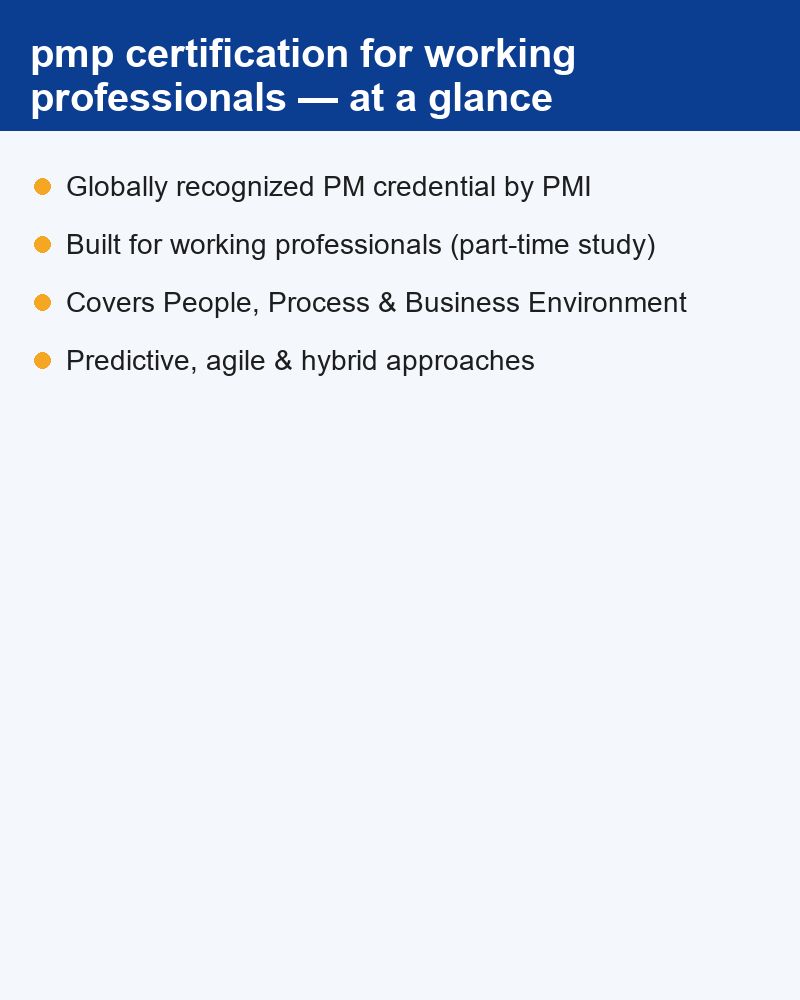
The PMP certification for working professionals is the gold-standard credential from the Project Management Institute (PMI). It signals that you can lead projects across predictive, agile, and hybrid approaches. Unlike entry-level certs, PMP assumes real project leadership experience and rewards it. For a working professional, it is the single most recognized proof of competency that employers worldwide trust.
Whether you manage software releases, construction sites, or marketing launches, the PMP certification for working professionals validates the skills you already use daily. It is not about theory alone; it is about demonstrated ability to deliver outcomes under constraints.
Who Is It For?
The PMP is built for people who lead projects while holding a day job. If you coordinate cross-functional teams, own a budget, or report to stakeholders, you qualify. The certification for working professionals fits part-time study because the exam content mirrors real work, not academic memorization.
- Team leads moving into project management
- Engineers and analysts taking on delivery ownership
- Managers who need a credential for promotion
PMP Eligibility: The Requirements
To sit the exam you need either a four-year degree plus 36 months of project leadership and 35 contact hours, or a secondary diploma plus 60 months plus 35 hours. PMI audits a sample of applications, so keep your hours documented. The pmp eligibility rules are strict but achievable for most working professionals within a year of focused tracking.
How Long Does It Take While Working?
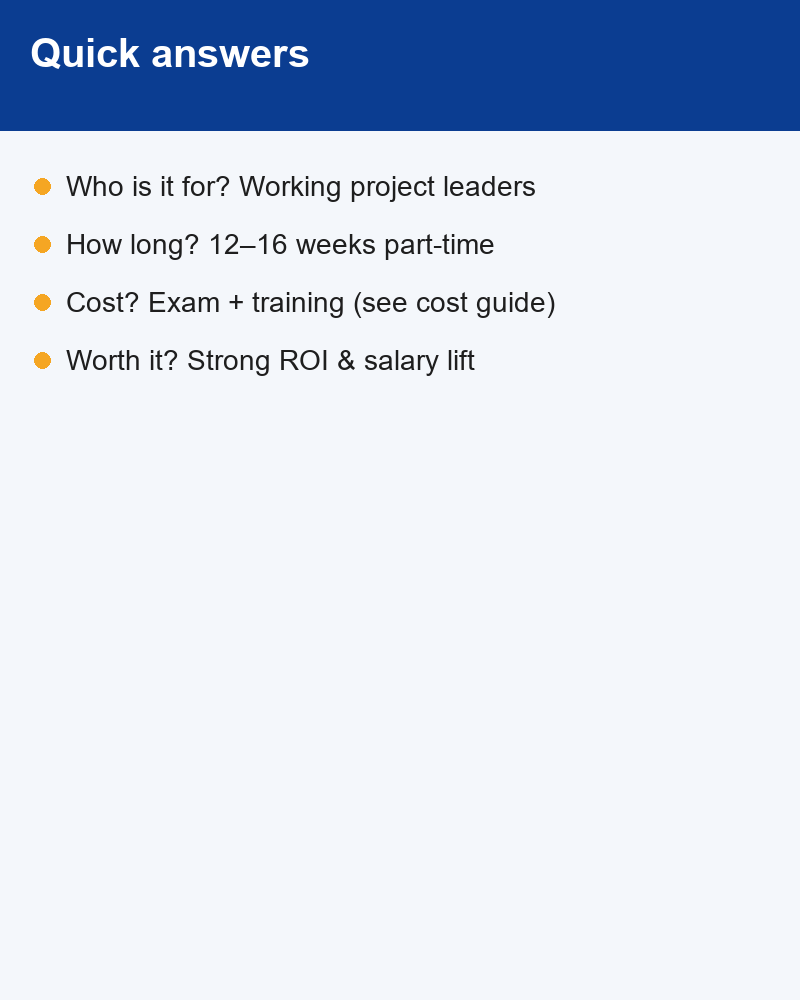
Most working professionals prepare in 12 to 16 weeks studying 8 to 10 hours per week. A part-time plan protects your job while building exam readiness. The pmp certification for working professionals works best when study is scheduled like a project: weekly milestones, mock exams, and a final two-week revision sprint.
What Does It Cost?
Budget for the PMI exam fee, a membership that lowers the fee, and training to earn your 35 contact hours. Total often lands in the low four figures. The strong ROI comes from salary lift and promotion access, which we cover in our cost and salary guide.
Exam Format at a Glance
The test has 180 questions across People (42%), Process (50%), and Business Environment (8%), in 230 minutes. Questions are scenario-based, so practice with situational items, not rote facts. Our exam pattern guide breaks down every question type.
Is PMP Worth It for Working Professionals?
Yes for most. PMP holders report meaningful salary premiums and faster advancement. The credential also future-proofs your career as organizations standardize on PMI frameworks. The pmp certification for working professionals is an investment that compounds over a lifetime of roles.
Frequently Asked Questions
Can I study for PMP while working full-time? Yes. Thousands pass each year on a 12 to 16 week part-time plan of 8 to 10 hours weekly.
Do I need a degree? No. A secondary diploma with 60 months of leadership experience also qualifies.
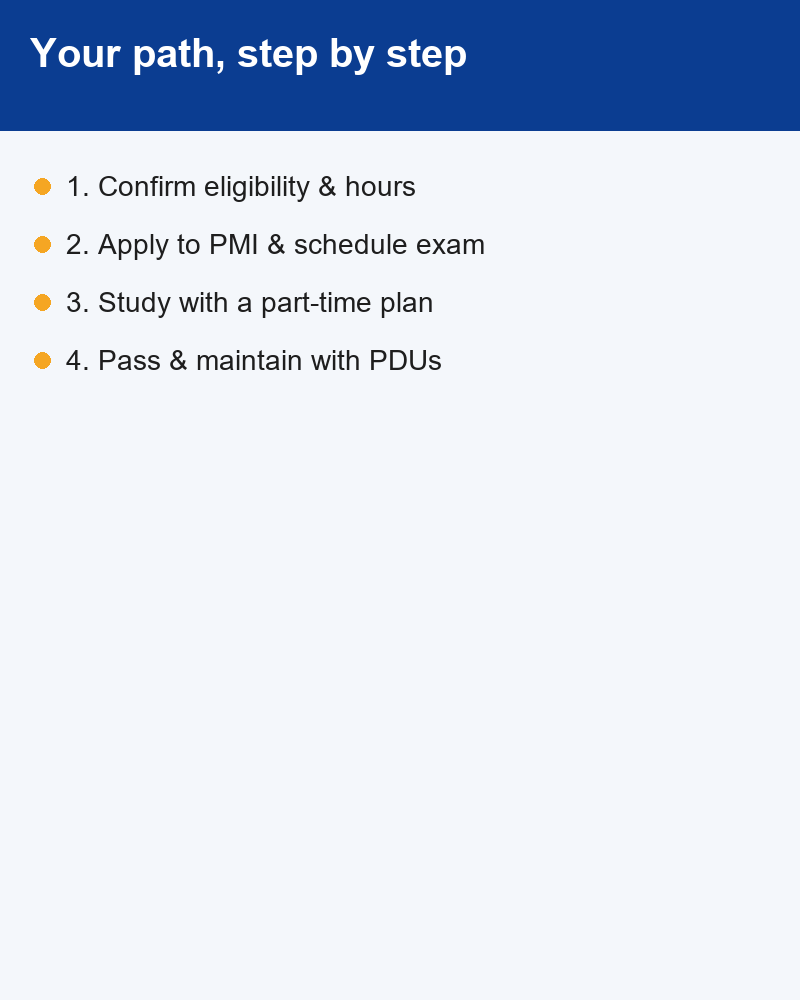
How do I start? Confirm eligibility, earn 35 contact hours, then follow a structured part-time study plan and sit the exam.
Get a Free PMP Consultation
Working professional planning your PMP? Get a personalized part-time study plan.


