
What does a certified fraud examiner do? ACFE gives a clear description, and it helps to read it before deciding whether the credential fits your career. This guide sets out ACFE’s four essential skills, the eight fields it accepts as fraud-related experience and what we could not verify. Our page on the CFE certification shows how we support candidates in the UAE and Saudi Arabia.
Reviewed against ACFE’s CFE credential, eligibility, exam and exam preparation pages on 21 November 2026. ACFE can change its rules, so confirm them on the official CFE eligibility page.
Key takeaways
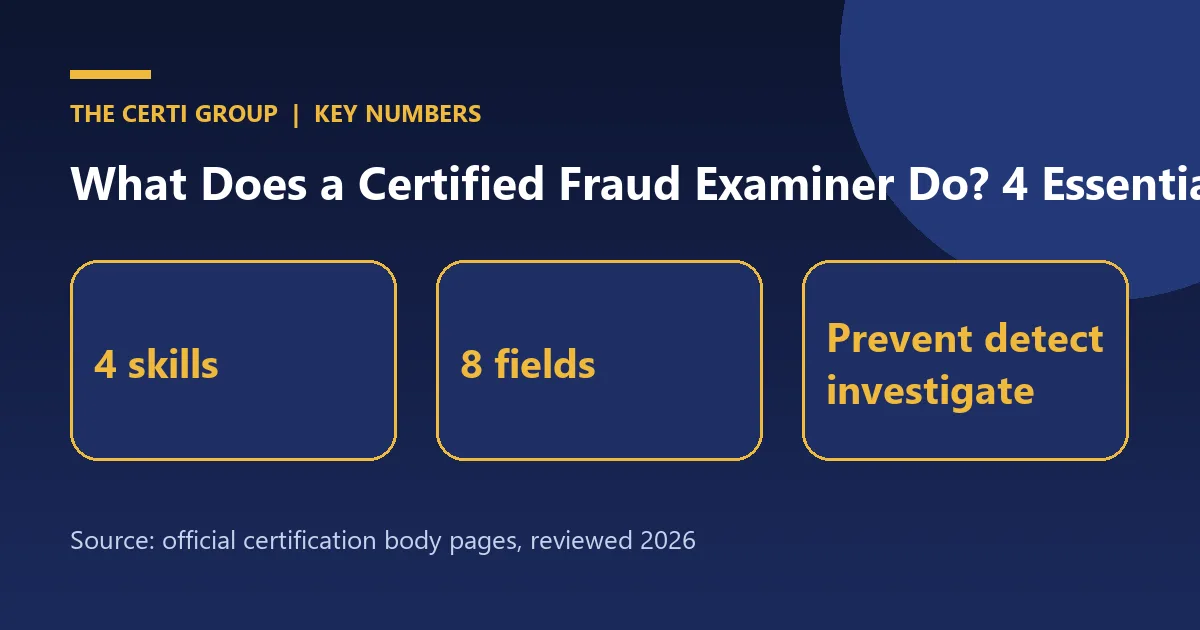
- ACFE describes CFEs as trained professionals who prevent, detect and investigate fraud.
- It lists four skills: knowing complex financial transactions, understanding investigative techniques and legal issues, resolving allegations and designing anti-fraud programs.
- ACFE approves eight categories of fraud-related experience.
- We do not quote salaries or job titles, because ACFE does not publish them.
Table of contents
What a CFE does, in ACFE’s words
ACFE says CFEs are trained professionals who possess a unique set of diverse skills in preventing, detecting and investigating fraud, and that organisations worldwide rely on them to safeguard their businesses from fraud’s impact. That is the best answer to what does a certified fraud examiner do from the source.
4 essential skills ACFE lists
- Knowledge of complex financial transactions.
- Understanding of investigative techniques and legal issues.
- The ability to resolve allegations of fraud.
- Designing effective anti-fraud programs.
These map to the three exam sections: schemes and financial crimes, investigations and legal issues, and prevention and deterrence. See CFE exam questions.
Where CFEs work
ACFE’s approved categories of fraud-related experience show where the work happens: accounting and auditing; compliance and ethics; corporate security and loss prevention; fraud investigation; fraud prevention and fraud risk management; fraud-related legal services, litigation support and consulting; proactive fraud detection; and teaching, writing or researching on fraud-related topics.
A typical day depends on the field
We do not describe a standard day, because ACFE does not publish one and the work varies by field. An auditor may test controls and look for red flags. A compliance officer may review transactions and handle reports. An investigator may gather evidence and interview witnesses. These are our examples of the categories, not ACFE statements.
Is the CFE right for you?
If your duties include preventing, detecting or investigating fraud, the CFE may fit. See is the CFE worth it and CFE vs CIA to compare.
What we could not verify
ACFE does not list job titles or salaries on the pages we read, so we do not quote any. For local demand, check job adverts in your market.
A worked example of two roles
An internal auditor with a CFE may spend time testing controls and looking for patterns that suggest fraud, then reporting findings to management. A compliance officer with a CFE may review reports, assess fraud risk and help design controls. Both use the same body of knowledge, but their day-to-day tasks differ. These are our illustrations of ACFE’s categories, not statements from ACFE about specific jobs.
How The Certi Group can help with what does a certified fraud examiner do
We support candidates in the UAE and Saudi Arabia with a points check against ACFE’s rules, a study plan, timed mock exams and booking guidance for the CFE. We do not run training or set the exam, and we do not promise a result. ACFE marks the exam. Our fee is confirmed in a written quote.
Frequently asked questions
What does a certified fraud examiner do?
Prevents, detects and investigates fraud, per ACFE.
What skills does a CFE need?
Financial transactions, investigations and law, resolving allegations and anti-fraud design.
Where do CFEs work?
In accounting, compliance, security, investigation, legal and other fraud-related fields.
What is the salary?
ACFE does not publish one on the pages we read.
Do I need experience?
Yes, two years for certification.